


Wie mein Vater schwimmen lernte
(How My Father Learned to Swim)
When my father was a child, he didn’t know how to swim.
Each day his brother and cousin took him to the river, threw him in and watched as he struggled.
Just before the water would claim him, his cousin would plunge in, pulling him back from the brink.
For weeks they repeated this ritual, testing his endurance, until at last he learned to swim.
To this day, my uncle does not know how to swim.
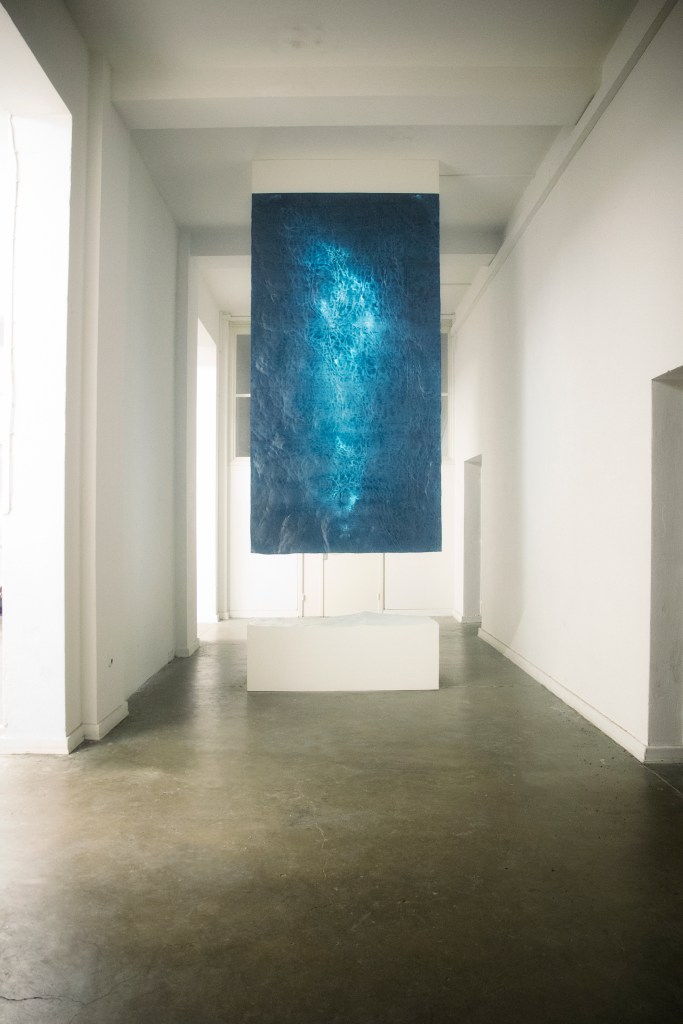
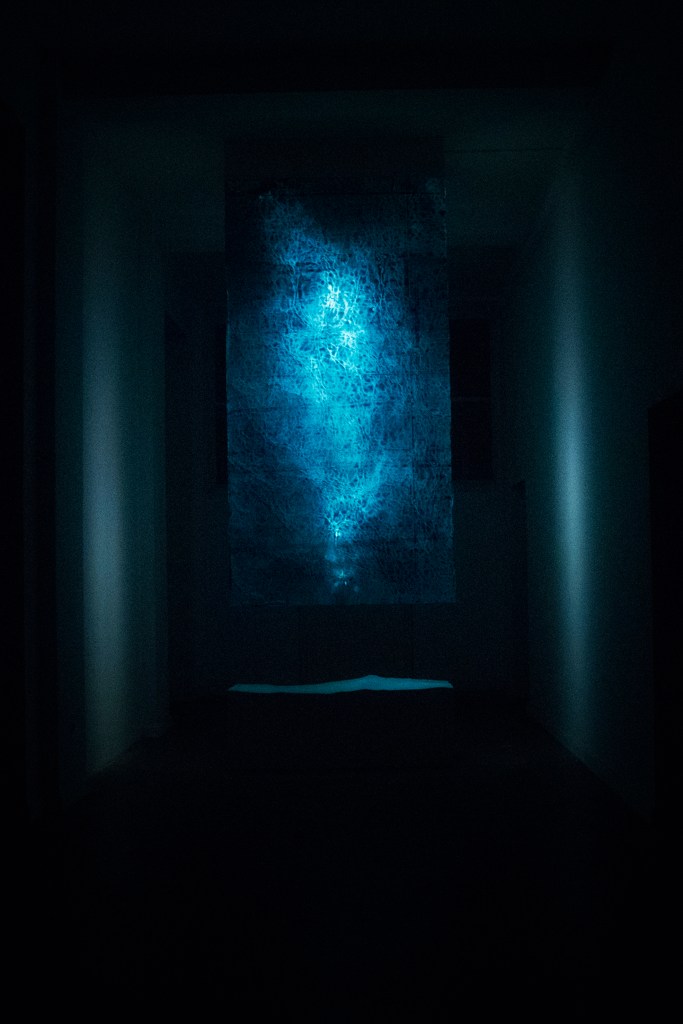
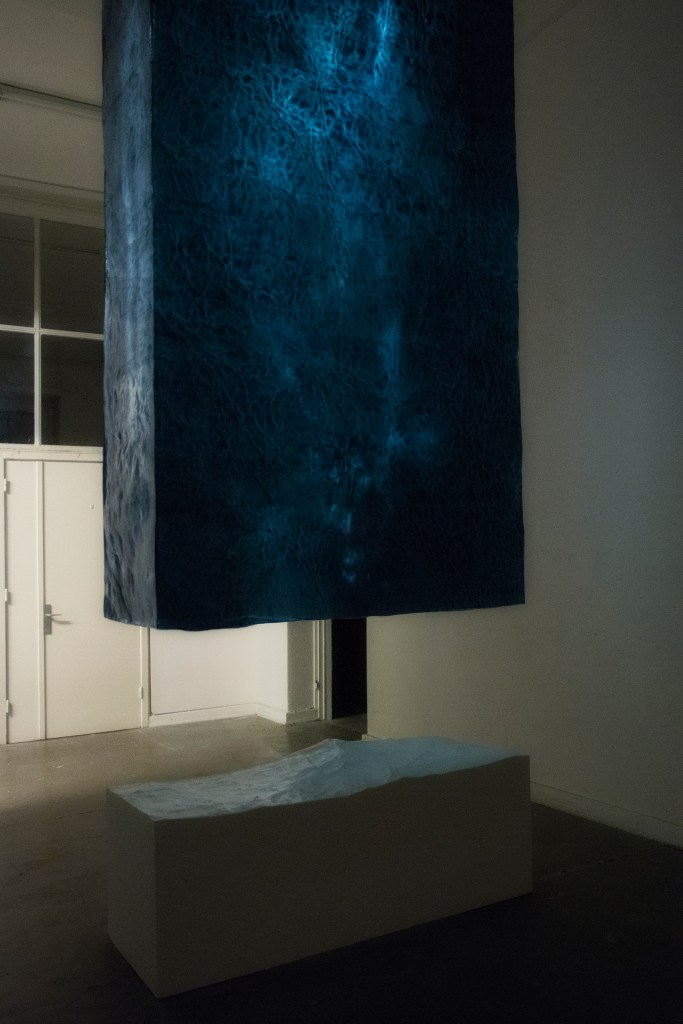
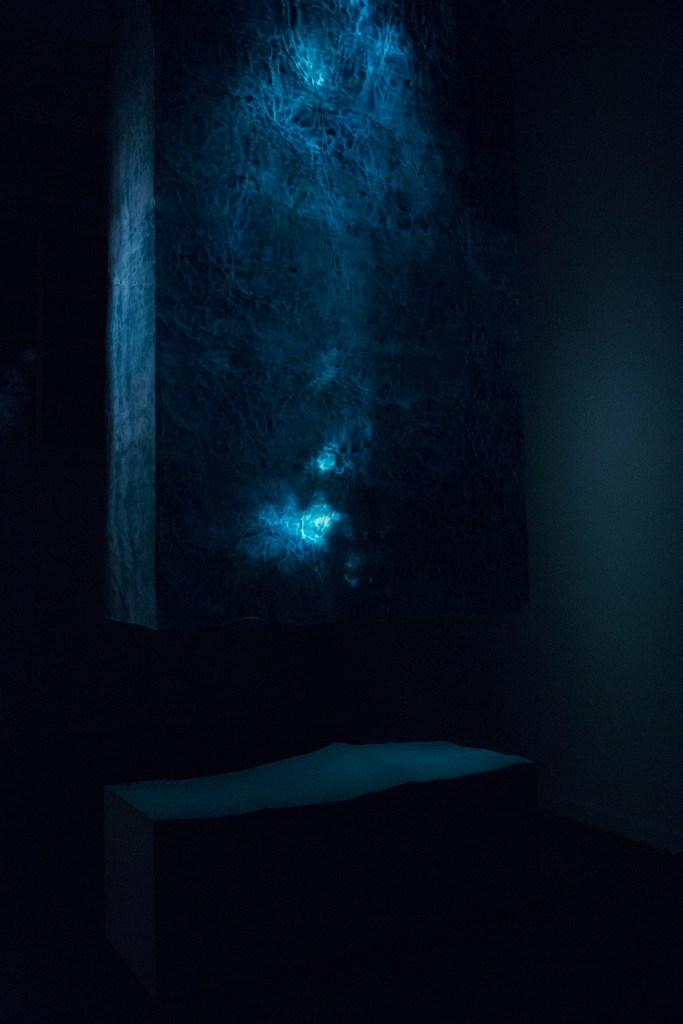
Through this installation, I aimed to explore the concept of fear—specifically the fear of water—while raising questions about responsibility. The work addresses blurred lines between care and harm, exploring how seemingly responsible acts can lead to unintended consequences. The work engages with individual understandings of responsibility, extending beyond legal and ethical norms, and explores its potential misuse. By using water as a central symbol, the work also touches upon broader political contexts, such as the refugee crisis in the Mediterranean, linking personal history to urgent contemporary concerns.
Author: Duško Ruljević
Voice: Raphaela Andrade
Production supervision: Michael Dachselt
Special thanks to: Jan Philipp Grelich, Ivana Ruljević, Sandra Wessberg






Wie mein Vater schwimmen lernte
(How My Father Learned to Swim)
When my father was a child, he didn’t know how to swim.
Each day his brother and cousin took him to the river, threw him in and watched as he struggled.
Just before the water would claim him, his cousin would plunge in, pulling him back from the brink.
For weeks they repeated this ritual, testing his endurance, until at last he learned to swim.
To this day, my uncle does not know how to swim.
Through this installation, I aimed to explore the concept of fear—specifically the fear of water—while raising questions about responsibility. The work addresses blurred lines between care and harm, exploring how seemingly responsible acts can lead to unintended consequences. The work engages with individual understandings of responsibility, extending beyond legal and ethical norms, and explores its potential misuse. By using water as a central symbol, the work also touches upon broader political contexts, such as the refugee crisis in the Mediterranean, linking personal history to urgent contemporary concerns.
Author: Duško Ruljević
Voice: Raphaela Andrade
Production supervision: Michael Dachselt
Special thanks to: Jan Philipp Grelich, Ivana Ruljević, Sandra Wessberg
 DUŠKO RULJEVIĆ